The Legal Guide to Split Sheets: Why a Handshake Isn't Enough
Music studios are magical places. The vibes are high, creativity is flowing, and everyone is friends. In that moment, bringing up paperwork feels like a "vibe kill."
"We'll figure it out later," someone says.
"Later" is the most dangerous word in the music business.
When "later" comes, memories fade. Egos get involved. Managers step in. And suddenly, that song you wrote together is frozen because nobody can agree on the percentages.
Here is the legal reality of what happens when you don't have a split sheet.
The Concept of "Joint Work"
Under U.S. Copyright Law, if two or more people create a song with the intention of merging their contributions, they have created a "Joint Work".
Unless there is a written agreement stating otherwise, the law assumes:
- Equal Ownership: Everyone owns an equal share. If there were 3 people in the room, you each own 33.3%, even if one person only hit a cowbell and the other wrote all the lyrics.
- Undivided Interest: Each owner can grant non-exclusive licenses to the song without the others' permission (though they must share the profits).
The Nightmare Scenario
Imagine you wrote 90% of a song, but your friend added a single guitar riff. You didn't sign a split sheet. Six months later, the song blows up. Your friend claims 50% ownership (default legal assumption). Or worse, they refuse to sign the licensing paperwork for a sync placement unless you give them 50%. The deal falls through. You lose thousands of dollars.
What is a Split Sheet?
A split sheet is a simple legal document that records:
- The name of the song.
- The legal names of all contributors.
- The ownership percentage of each person (e.g., 50% / 50%).
- Signatures / Dates.
It overrides the default "Equal Ownership" rule and establishes exactly what was agreed upon in the room.
Why "Emails" Aren't Enough
We often hear, "I have a text message where he agreed to 20%." While better than nothing, text messages and email threads are messy evidence. They can be interpreted as "negotiations" rather than final agreements. A signed document (or a digitally signed agreement via SplitChord) is definitive proof of intent.
The "Nashville Rule" vs. "Topline"
There are different ways to split songs, and a split sheet records which method you chose:
- Nashville Rule: Everyone in the room splits the song equally, regardless of contribution size.
- Music / Lyrics: 50% generally goes to the "Track" (Producers) and 50% to the "Topline" (Writer/Lyricist).
There is no "right" way, only the way you agree upon. But you MUST agree.
Conclusion
Protect your friendships and your bank account. Use a tool like SplitChord to generate and sign split sheets right from your phone before you leave the session. It takes 30 seconds and saves years of legal headaches.
Keep Reading
DMCA Takedowns vs. Split Sheets - Why Filing a Takedown is NOT a Substitute for Handling Your Business
A DMCA takedown is not a magic button that gives you 100% ownership. Here's what the law actually says about copyright ownership, joint works, and why a split sheet is the only real protection.

AI & Music Rights in 2026: Who Owns a Song Made with AI?
AI tools are everywhere in music production. But who owns the copyright? What are the legal grey areas? Here's what every creator needs to know in 2026.
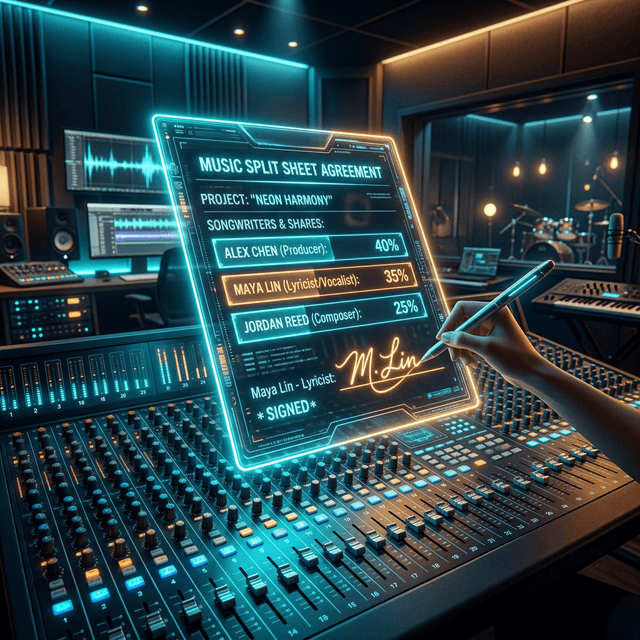
What Are Songwriting Splits? The Ultimate Guide on How to Divide Music Royalties
Everything you need to know about songwriting splits, how royalties are divided between lyricists and composers, and why split sheets are critical for your music career.
Protect Your Rights Today
Don't let split disputes ruin your relationships. Download SplitChord and get everyone on the same page before you leave the studio.